
TUNE UNHAS Promotes Green and Digital Transformation Through In-House Training for Young Faculty Members and Researchers
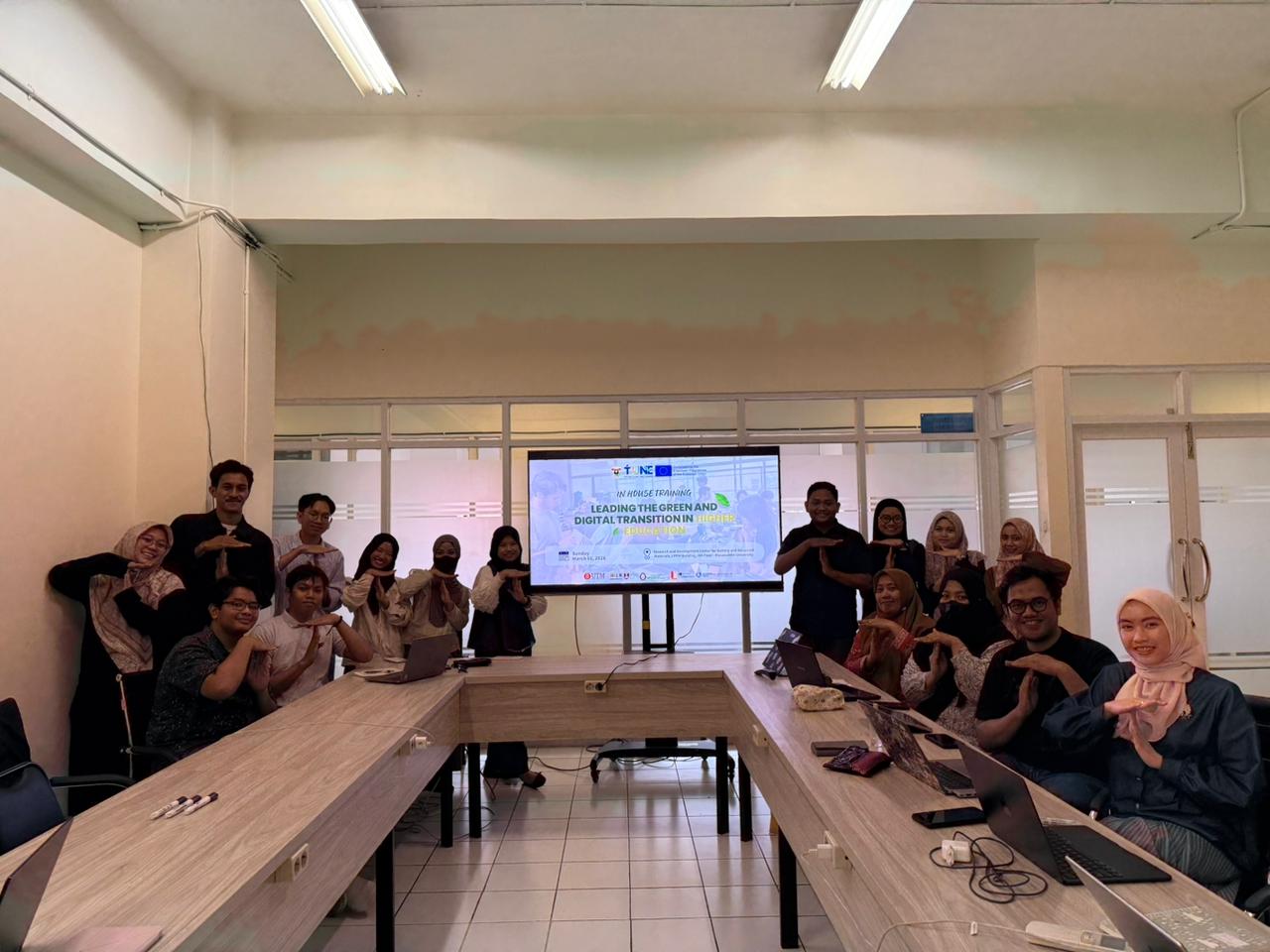
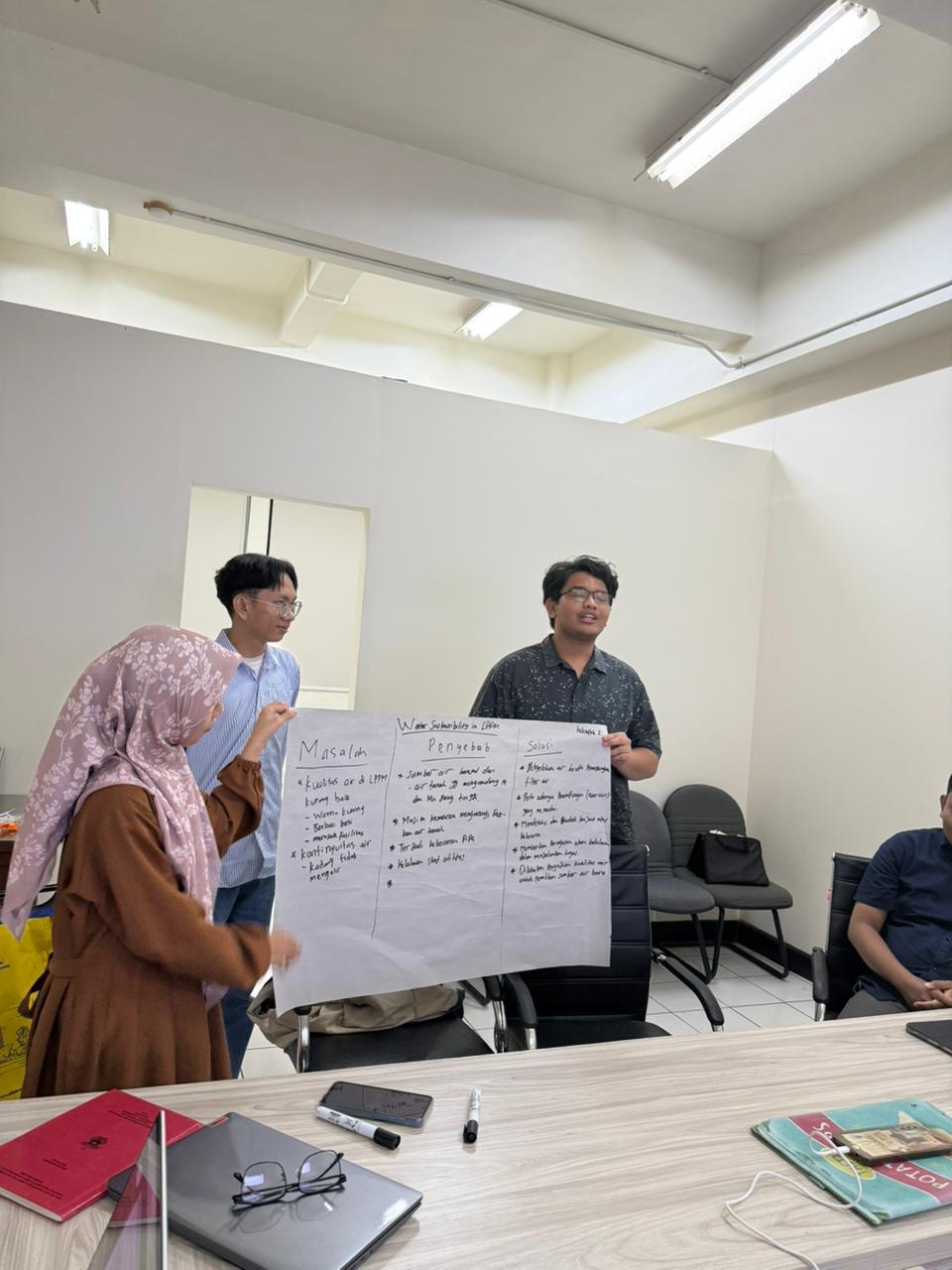
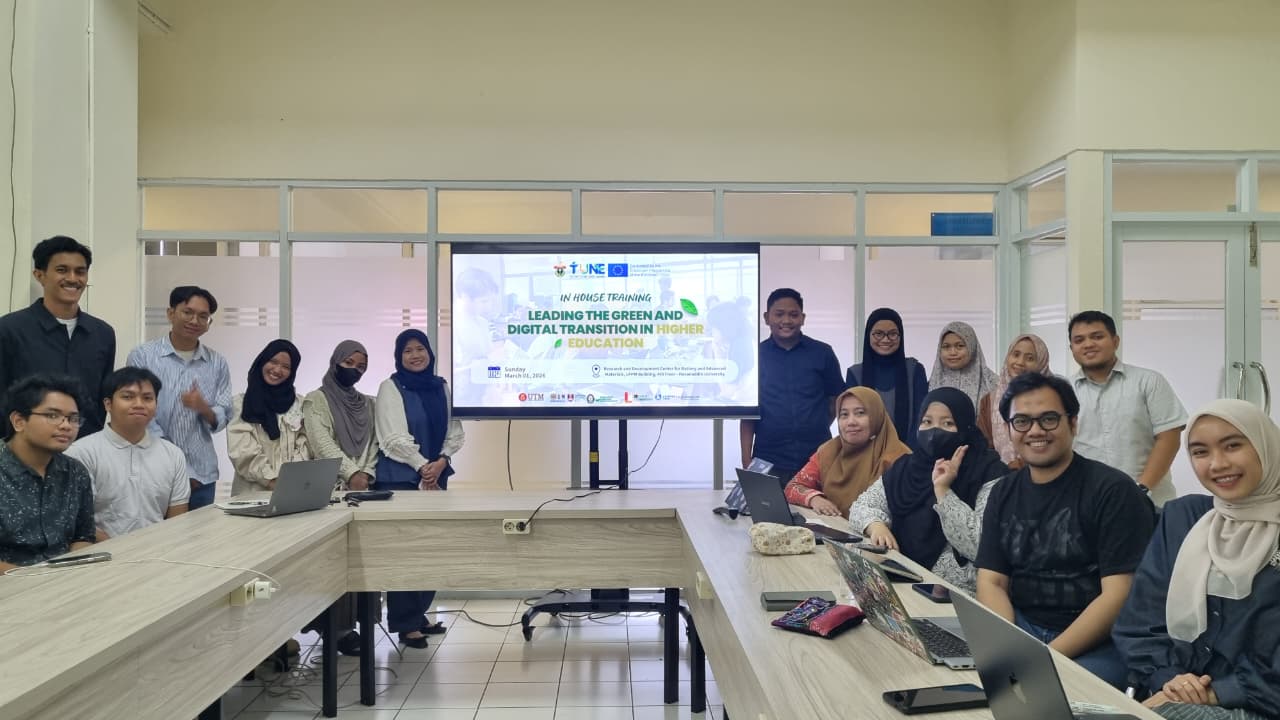
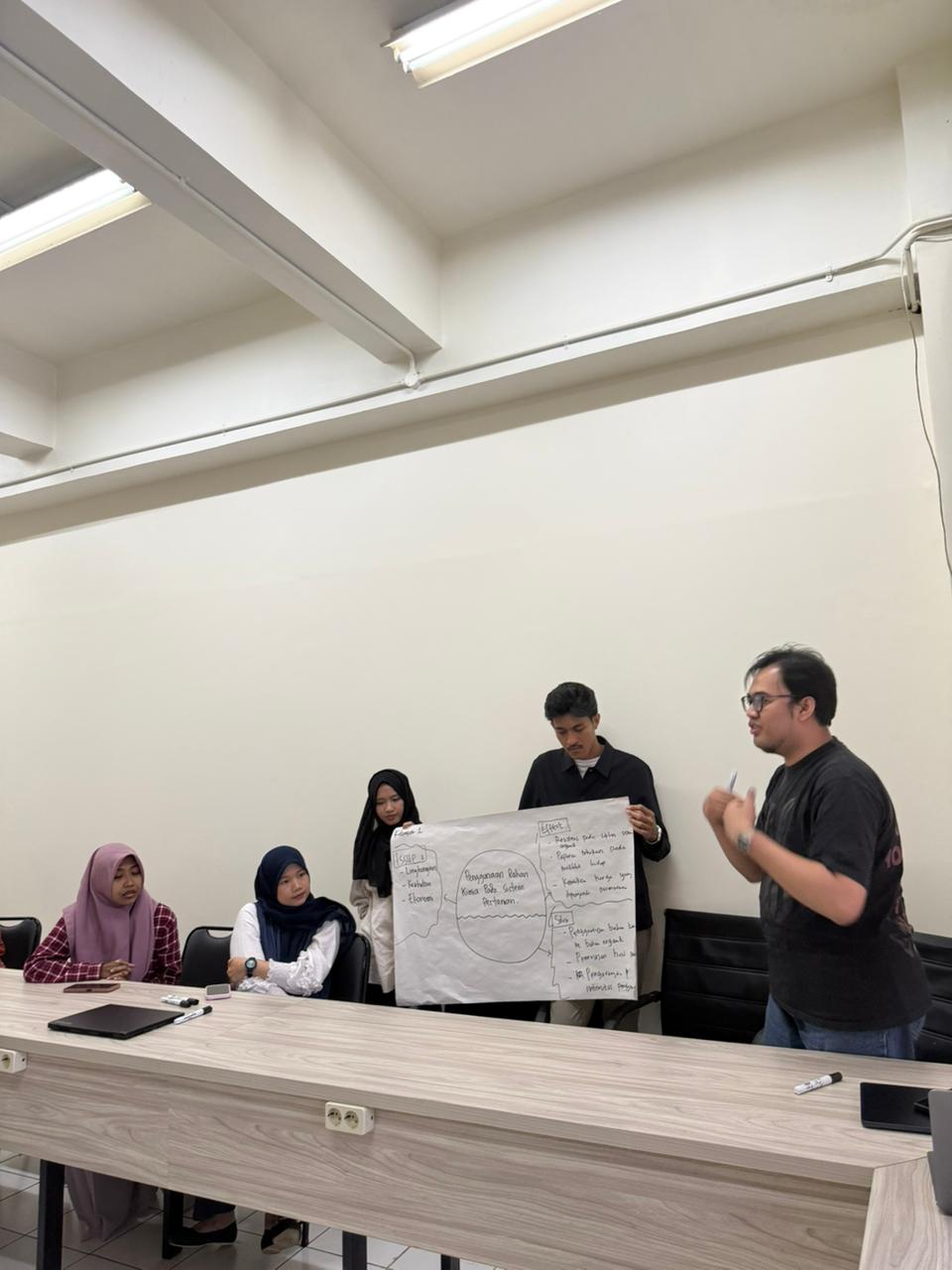
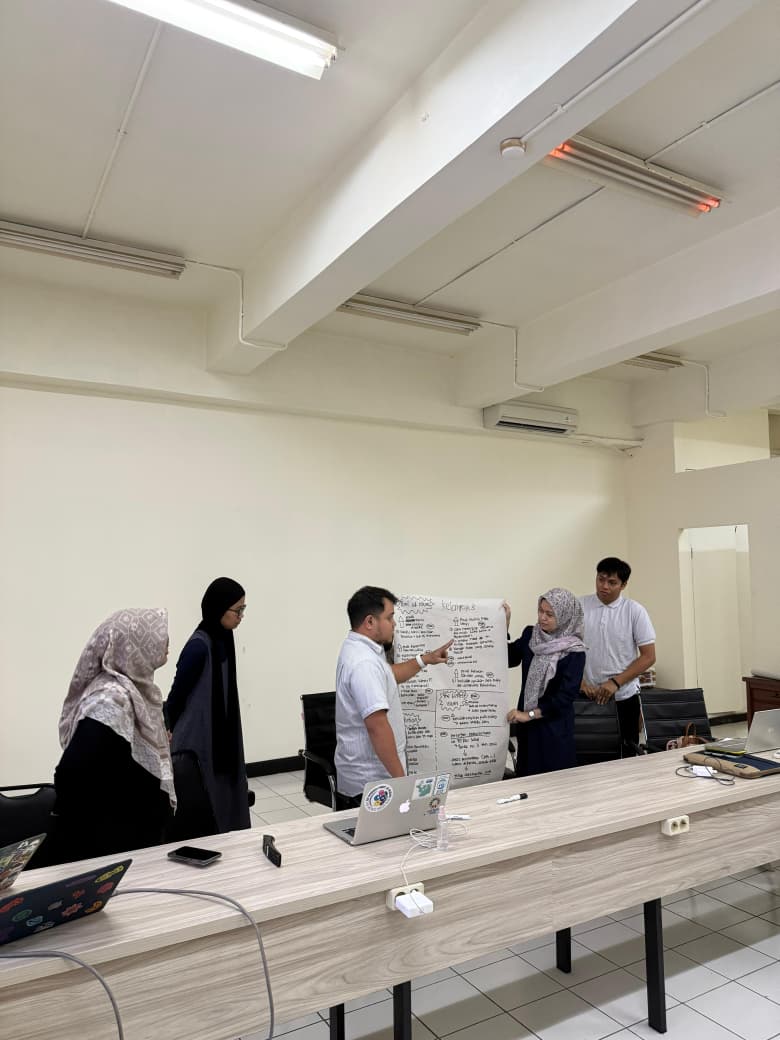
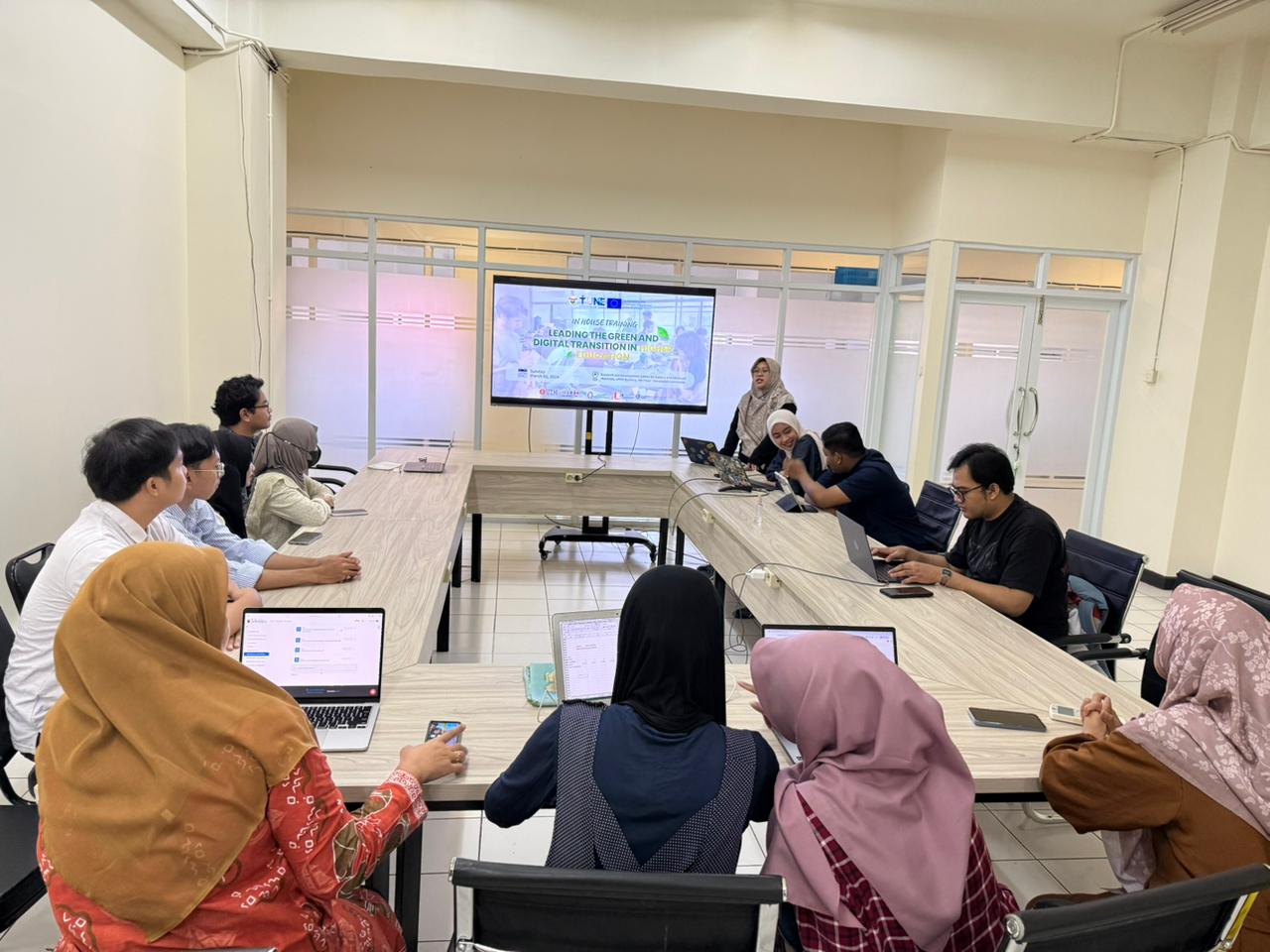
An in-house training session titled “Leading the Green and Digital Transition in Higher Education” was successfully held as part of the implementation of the TUNE (Nurture Future Green Leaders) program, which is part of the Erasmus+ CBHE Program. This event served as a capacity-building opportunity for the academic community to drive green and digital transformation within the higher education sector.
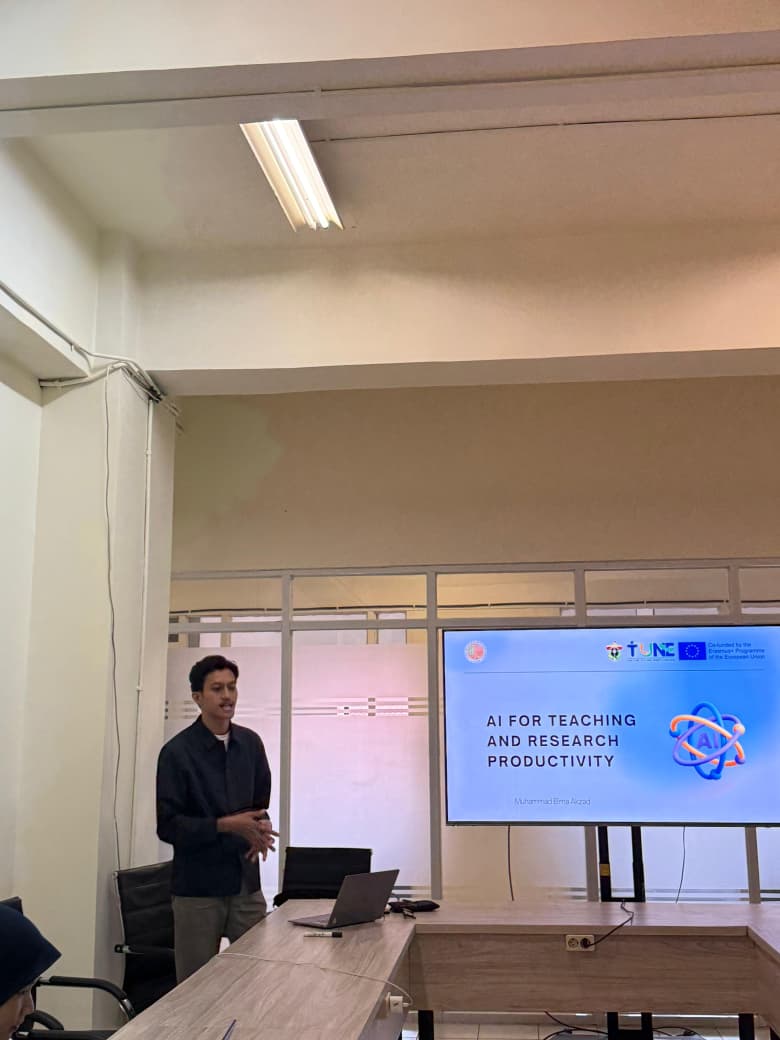
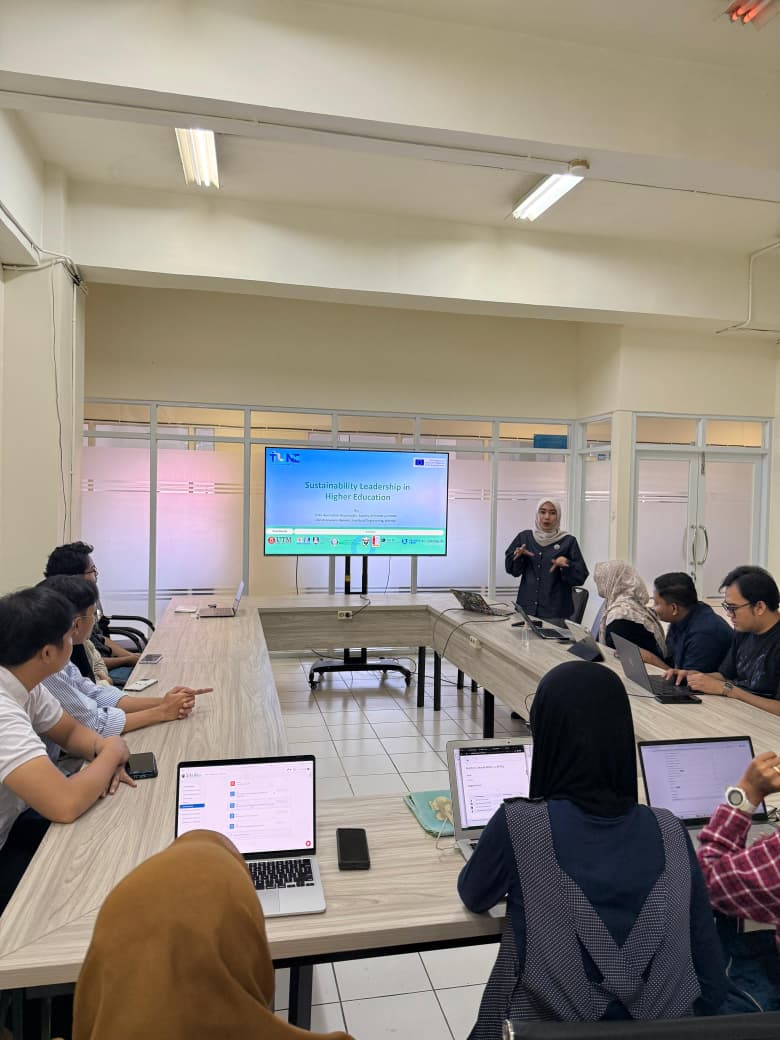
The event was attended by 18 participants, consisting of young faculty members and researchers from various fields at Hasanuddin University. The event was opened by Dr. Roslinda Ibrahim, S.P., M.T., as the TUNE UNHAS Project Leader, and was facilitated by Zarah Arwieny Hanami, S.T., M.T., a lecturer at the Faculty of Engineering. Presentations were delivered by Dian Ayu Lestari, S.Hut., M.Si., from the Faculty of Forestry, who discussed “Sustainability Leadership in Higher Education”; Muh. Bima Akzad, S.Hut., M.Hut. (Faculty of Forestry) on the topic “AI for Teaching and Research Productivity,” and Dianti Utamidewi, S.T., M.T., from the Faculty of Engineering on “Digital Pedagogy – Using H5P for Interactive Learning,”
The event took place on Sunday, March 1, 2026, from 10:00 AM to 3:00 PM WITA, at the Research and Development Center for Batteries and Advanced Materials, 4th Floor of the LPPM Building, Hasanuddin University. This training was organized in response to the need for higher education institutions to strengthen the competencies of faculty members and researchers in addressing the challenges of the green and digital transitions.
The event was conducted interactively through a combination of presentations, discussions, and hands-on practice. In the digital pedagogy session, participants were introduced to the use of H5P for designing more participatory learning content. The AI session encouraged the exploration of artificial intelligence to support scientific writing and research management. Meanwhile, the sustainability leadership session emphasized the importance of academics’ role as agents of change in fostering a culture of sustainability within higher education institutions.
Through this initiative, TUNE UNHAS reaffirms its role in preparing academics who are responsive to global changes. This initiative is expected to serve as a concrete step toward strengthening an adaptive, innovative, and sustainability-oriented academic ecosystem at Hasanuddin University.
-
Departemen Teknik Lingkungan Unhas Gelar Kuliah Tamu Internasional, Bahas Peran AI dan Kesadaran Lingkungan Bersama Pakar UTM Malaysia
-
Environmental Engineering Department at Unhas Hosts International Guest Lecture on the Role of AI and Environmental Awareness with UTM Malaysia Expert
-
Unhas Perkuat Komitmen Kampus Hijau
-
TUNE UNHAS Dorong Transformasi Hijau dan Digital melalui In House Training bagi Dosen Muda dan Peneliti
-
Seminar Replikasi TUNE: Membentuk Pemimpin Hijau Berkelanjutan di Universitas Hasanuddin