
The Training of Trainers 1: Green Jobs in Higher Education was successfully held at Hasanuddin University.
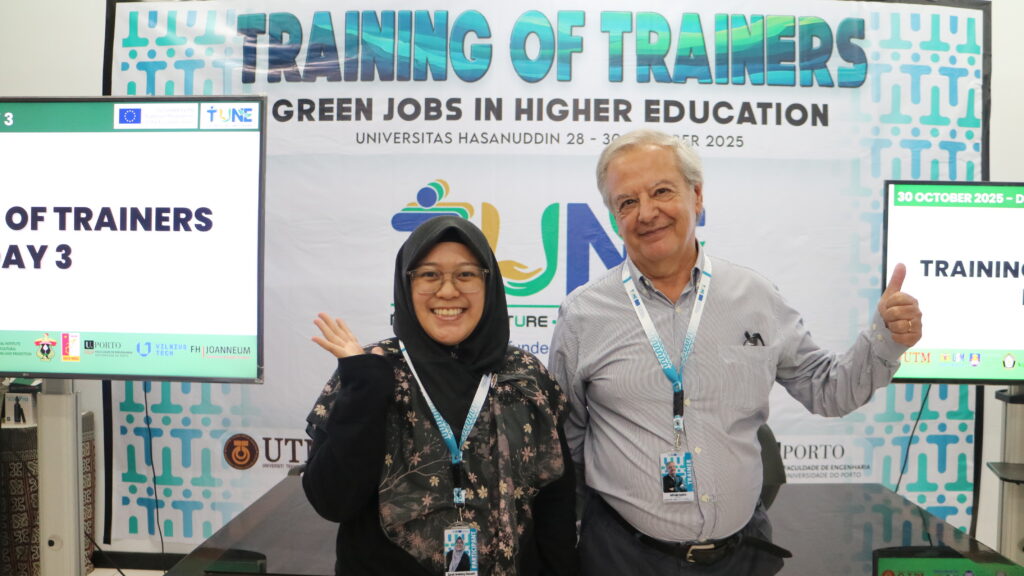
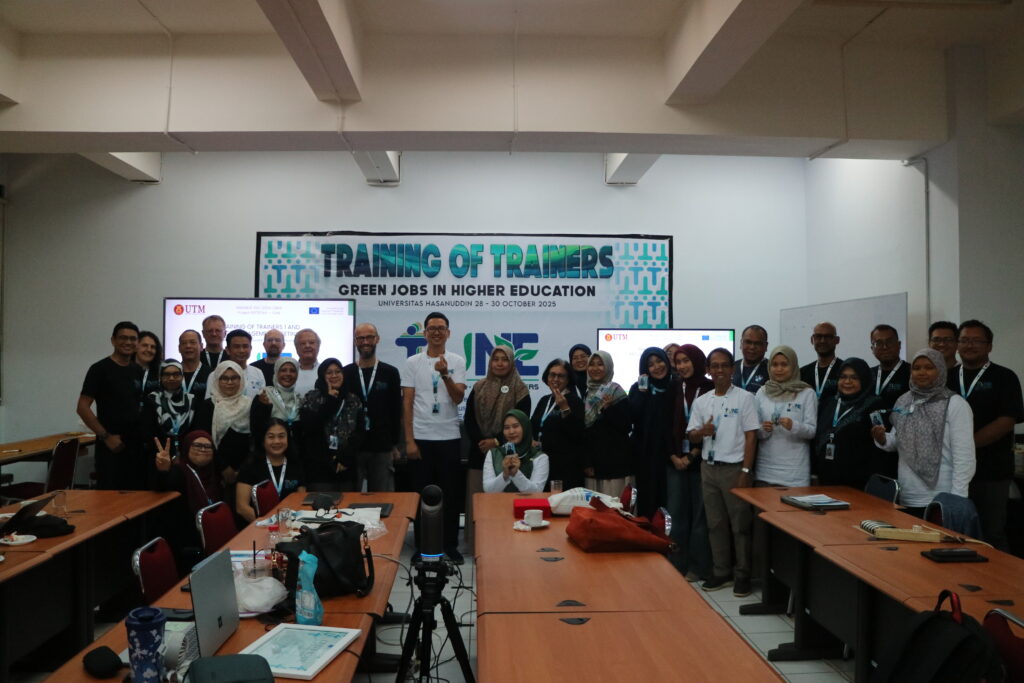
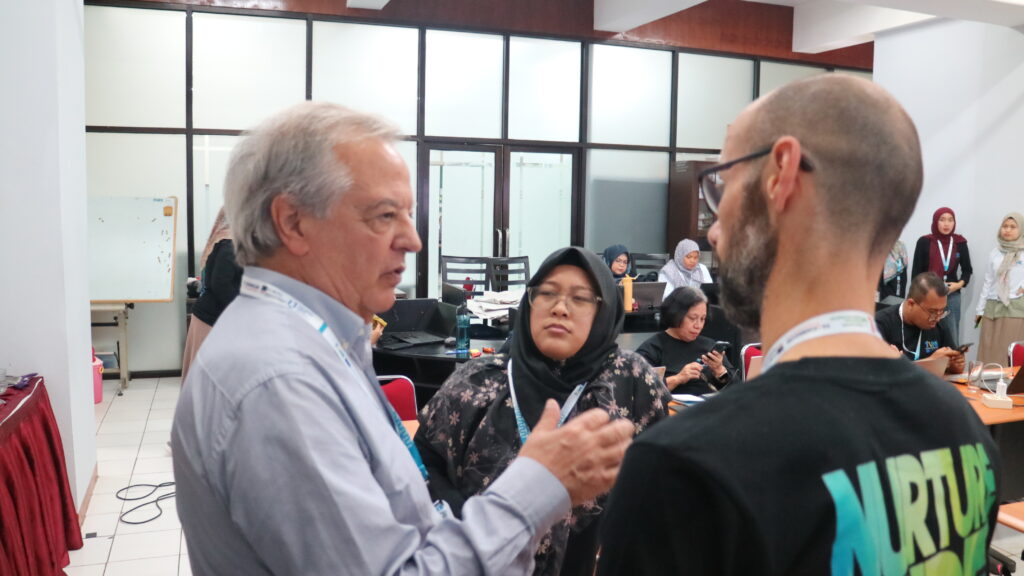
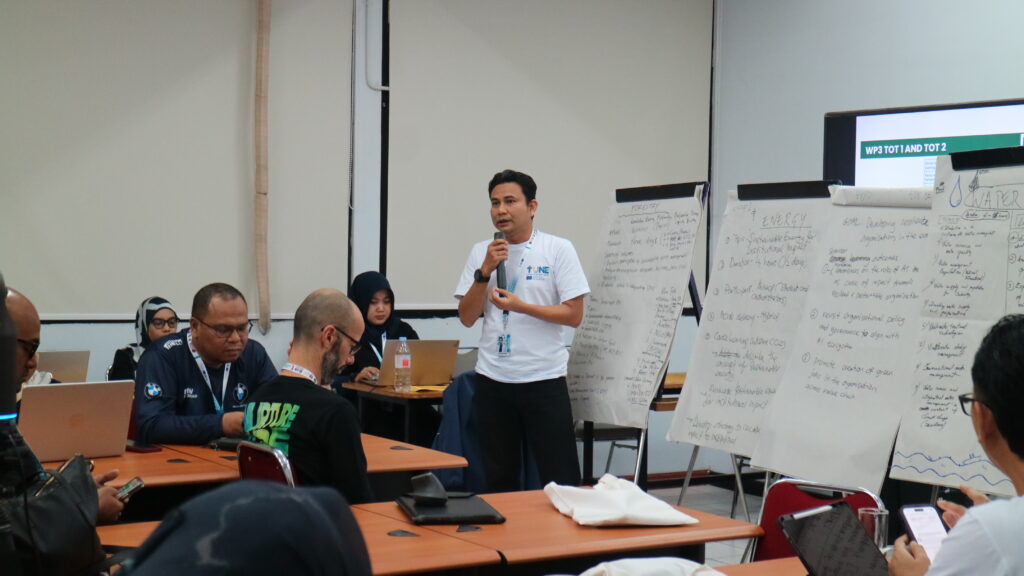
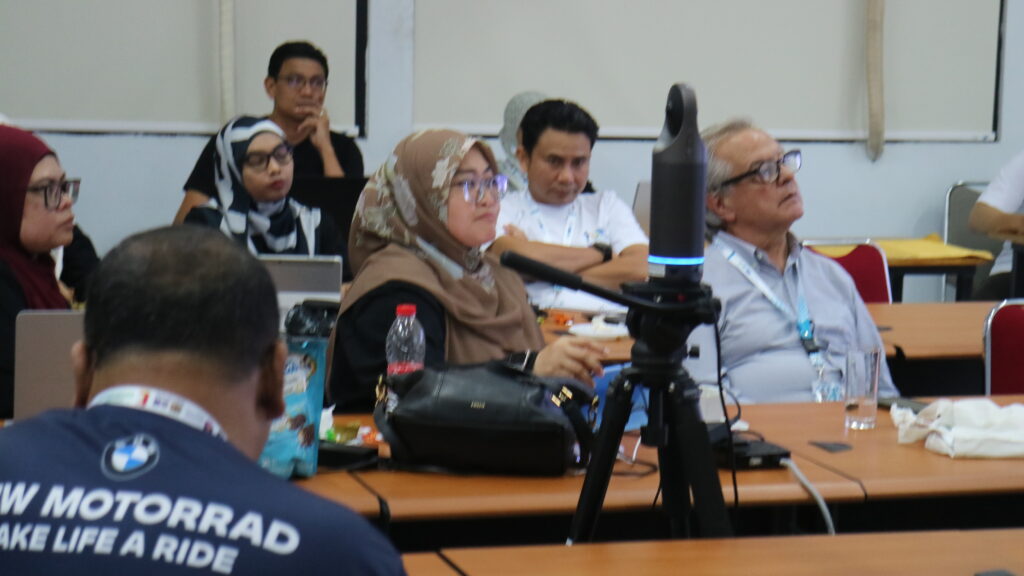
Hasanuddin University (UNHAS) successfully hosted Training of Trainers (ToT) 1 – Green Jobs in Higher Education, a three-day capacity-building program under the TUNE (Nurture Future Green Leaders) project funded by the European Union’s Erasmus+ Program, on October 28–30, 2025. The event was attended by approximately 38 participants, consisting of academic staff and partner association representatives, with the aim of equipping participants with the knowledge and pedagogical skills to integrate green jobs and sustainability issues into higher education curricula.
The program involved representatives from ten partner institutions, namely:
- Hasanuddin University (UNHAS)
- Universiti Teknologi Malaysia (UTM)
- Universiti Teknologi MARA (UiTM)
- Universiti Sains Malaysia (USM)
- Diponegoro University (UNDIP)
- University of Porto (UP)
- VILNIUS TECH
- FH Joanneum
- National Institute of Agricultural Planning and Projection (NIAPP)
- Hanoi University of Science and Technology (HUST)
Additionally, the event was attended by a non-partner institution, Ciputra University Surabaya (UC), as well as a partner association from TalentCorp Malaysia.
The training team comprised experts from TUNE partners across Europe and ASEAN, reflecting the strong international collaboration and knowledge exchange within this project. Throughout the program, participants engaged in nine interconnected training modules.
The first day focused on pedagogical foundations, covering the formulation of learning outcomes, the Outcome-Based Teaching (OBT) approach, learning assessment, and the use of online/instructional technology.
The second day continued with competency-based capacity building, with materials covering the European Union’s sustainability competency framework (GreenComp), sustainable leadership, institutional capacity, and individual competencies.
The third day concluded with sector-specific applications, covering the fields of construction, energy, transportation, water management, artificial intelligence, agriculture, and forestry. All sessions were delivered through a combination of expert presentations, interactive discussions, group reflections, and practical exercises.
This program represents a strategic step in strengthening the role of higher education institutions in supporting the transition toward a sustainable and future-ready green workforce, particularly in the ASEAN region. Following the completion of ToT 1, participants are expected to replicate the training at their respective institutions, with the capacity-building process continuing through ToT 2 to enhance program implementation and impact.